Quick answer: Minimalist travel is not about owning less; it is about carrying only what earns its place. The practical payoff is mobility – no bag drop, no waiting at a carousel, and the ability to change plans without logistics. The limit is laundry.
What this guide covers
Travelling light gets talked about as a discipline. It is easier to think of it as a trade: you give up options at the destination in exchange for freedom of movement.
Whether that trade is worth it depends entirely on the trip.
What you actually gain
- No bag drop queue and no carousel – typically 40 minutes each way
- Nothing to lose in transit
- Trains, stairs and cobbled streets stop being a calculation
- Changing plans mid-trip becomes possible rather than expensive
That last one is the real prize. A small bag means you can take an earlier train, walk from the station, or say yes to a detour.
The capsule that makes it work
Minimalist packing is not a shorter version of a normal list. It is a different list, built so that everything combines with everything.
Five tops, two bottoms, one layer, in one colour family. That is ten outfits from seven garments, and it fits one cube with room to spare. The carry-on guide builds it properly.
Where it stops working
Laundry is the honest limit. A capsule works indefinitely if you can wash things, and for about a week if you cannot. Beyond that you are either doing laundry or carrying more, and there is no third option.
The other limit is trips with genuine kit requirements – skiing, camping, a wedding, a work trip needing a suit. Minimalism is a good default, not a rule to defend when it stops helping.
Compression is the enabler
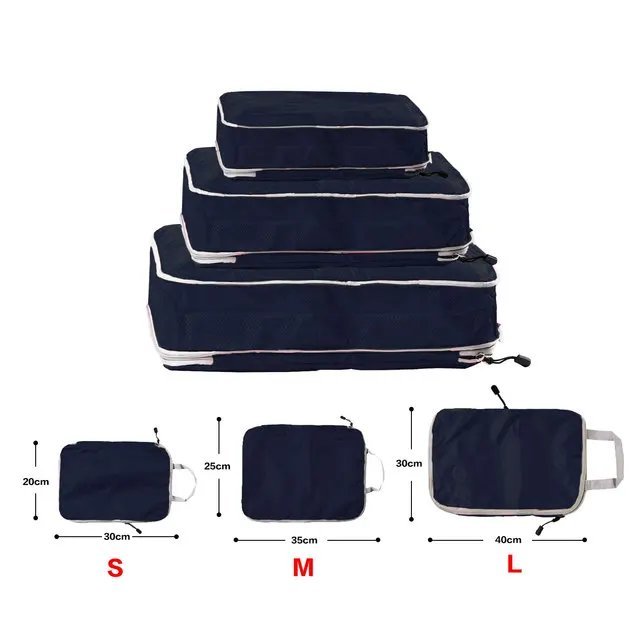
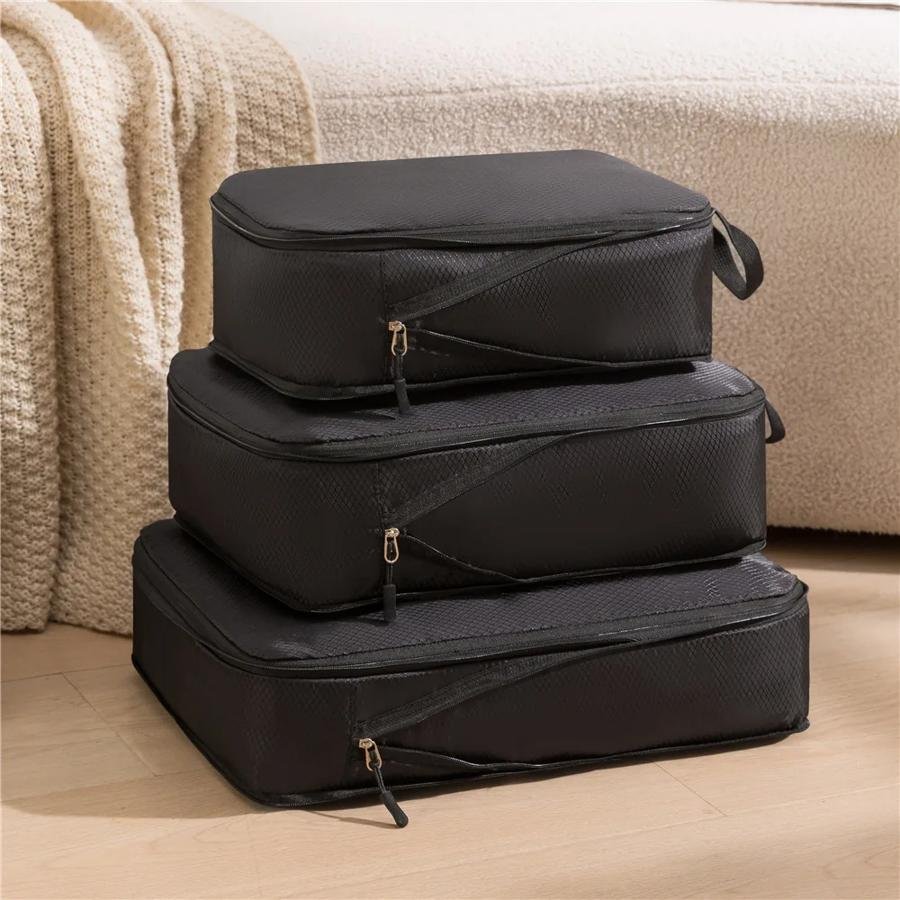
The thing that turns a nearly-light bag into a genuinely light one is removing the air from whatever is bulky. One compression cube for a jumper and a jacket often buys the last few centimetres.
Just remember what it does not do: it saves volume, not weight. The measured numbers are worth reading before you count on it, and the overpacking piece covers why the last few items are the hardest to drop.
The short version
- The real payoff of travelling light is mobility, not virtue – you can change plans without logistics.
- Skipping bag drop and the carousel saves roughly 40 minutes in each direction.
- Five tops, two bottoms and one layer in one colour family gives ten outfits from seven items.
- Laundry is the honest limit: a capsule works for about a week without washing, indefinitely with it.
- Minimalism is a good default, not a rule to defend on a ski trip or to a wedding.
Frequently asked questions
How little can you travel with realistically?
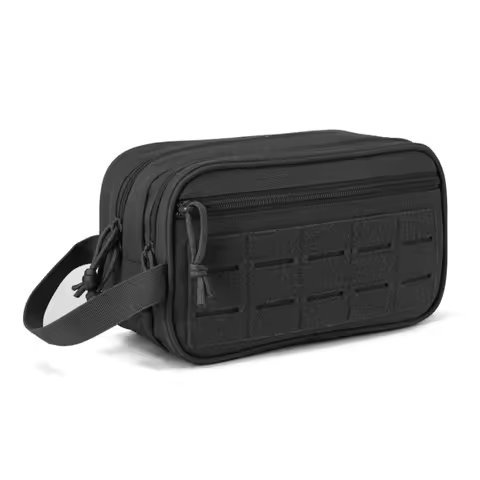
For a week, a capsule of five tops, two bottoms, one layer and a wash bag fits a cabin bag comfortably. Beyond a week the constraint is not the clothes, it is whether you can do laundry.
Is minimalist travel worth it?
For city breaks, trains and multi-stop trips, clearly. For a single-destination beach fortnight with a family, much less so - you gain little from carrying less when the bag goes in a car and stays in a room.
How do you do laundry while travelling light?
Wash a couple of items in a sink every second night rather than doing a full load weekly. Quick-dry fabrics matter more than quantity here, because the constraint is drying time, not washing time.
Do packing cubes help with minimalist travel?
They help mostly by making the limit visible. If your clothes have to fit one cube, the decision about what comes gets made at home rather than being deferred until the case will not close.
What is the hardest thing to give up when packing light?
Shoes, consistently. A second and third pair are bulky, incompressible and hard to justify individually, which is exactly why they end up in the bag anyway.