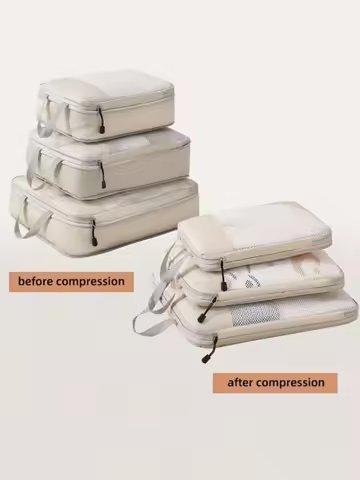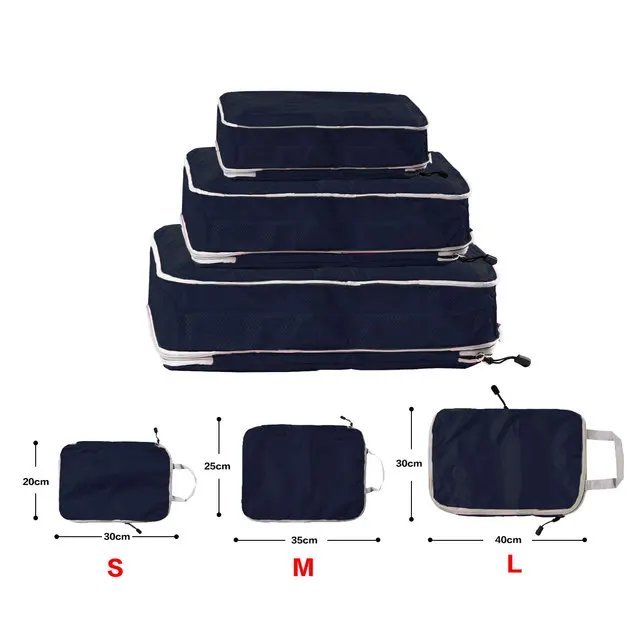
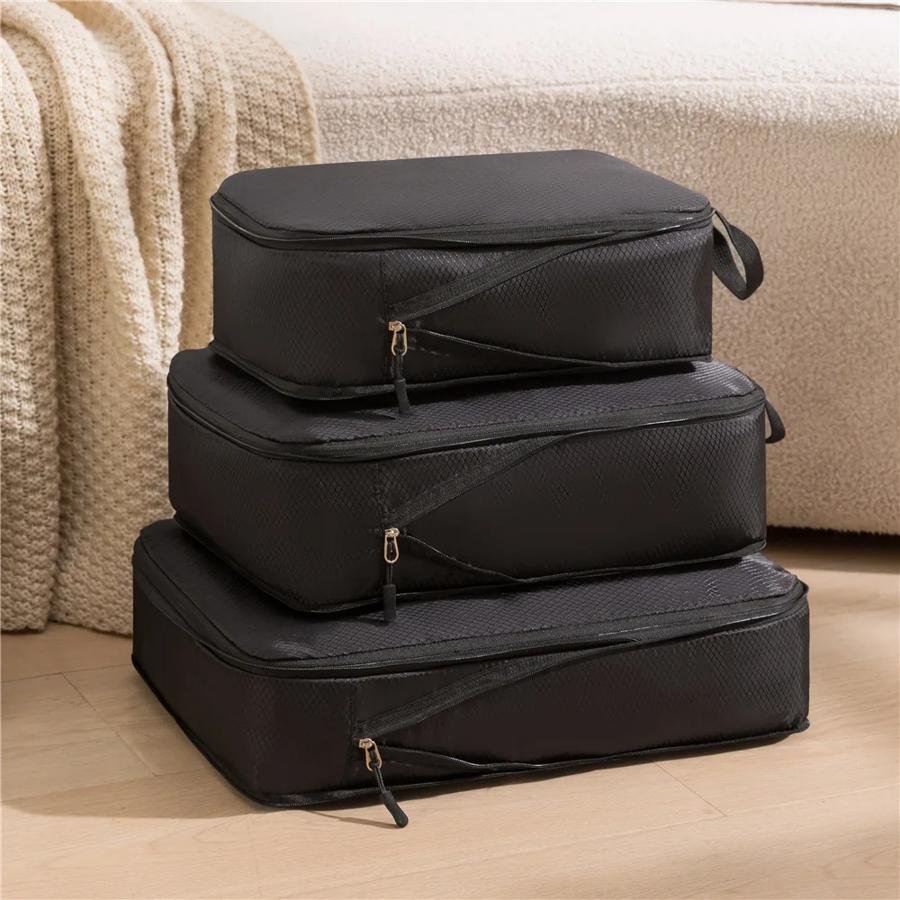
Quick answer: Compression cubes typically recover 25 to 35 per cent of packed height on bulky soft items like jumpers and fleeces, around 10 to 15 per cent on t-shirts, and close to nothing on jeans or anything already flat. The advertised figures assume the bulkiest possible load.
What this guide covers
Packaging often claims things like 60 per cent. That number is not invented, but it describes a best case – a cube stuffed with the loftiest possible clothing and measured at maximum compression.
Here is what happens with a normal suitcase.
The realistic numbers
| Contents | Height saved | Worth it? |
|---|---|---|
| Padded coat, duvet jacket | 30–40% | Yes, clearly |
| Jumpers, fleeces, knitwear | 25–35% | Yes |
| Towels, bedding | Around 30% | Yes |
| T-shirts, light tops | 10–15% | Marginal |
| Jeans, chinos | Under 10% | No |
| Shirts, anything flat | Negligible | No – and it creases |
The rule underneath is simple: compression removes trapped air, so the gain is proportional to how much air the item was holding.
What that means for a real case
For a typical week's packing – a coat, two jumpers, five tops, two pairs of trousers – compressing everything gets you roughly 20 per cent overall, and almost all of that comes from the coat and jumpers.
Which is why the practical advice is not to compress everything. Put the bulk in one or two compression cubes and leave the rest in standard cubes, where it creases less and packs just as small.
What it never does
Weight. Compression cannot change mass, and against a hold-bag scale it is no help whatsoever. If anything it encourages you to fill the space you just freed.
It also creases more than folding flat, which is why shirts and structured clothing belong elsewhere – see fold or roll and compression vs regular cubes.
Measuring it yourself
Pack the cube, close the first zip and stand it on a table. Measure the height. Close the compression zip and measure again. That ratio is your real saving for your clothes, and it takes two minutes.
Do it once with a jumper and once with jeans and you will never need to ask the question again. There is more in the full compression guide.
The short version
- Expect 25–35% on jumpers and fleeces, 30–40% on a padded coat, and under 10% on jeans.
- Advertised figures like 60% describe a best case with the loftiest possible contents.
- Across a whole week's packing the real overall saving is around 20%, nearly all of it from the bulky items.
- Compress the bulk only – leave shirts and flat items in standard cubes where they crease less.
- Measure it yourself: cube height before and after the second zip takes two minutes and settles it.
Frequently asked questions
Do compression cubes really save 60% of space?
Not in normal use. That figure describes the best possible case - a cube filled with the loftiest clothing and measured at full compression. On real packing, 25 to 35 per cent on bulky soft items is the honest range.
What compresses best in a packing cube?
Anything holding a lot of trapped air: padded coats, fleeces, jumpers, towels and bedding. What barely compresses at all is anything dense and already flat, like jeans, shirts or folded chinos.
Should I compress everything in my suitcase?
No. Compress the bulky items and leave everything else in standard cubes. Compressing a shirt gains almost no space and creases it badly, so you pay a real cost for no benefit.
Do compression cubes save weight?
Never. Removing air changes volume, not mass. If you are fighting a hold-bag weight limit, compression will not help and may tempt you to add more to the space it frees up.
How do I measure how much space I am saving?
Fill the cube, close the main zip, stand it up and measure its height. Then close the compression zip and measure again. The difference between the two is your genuine saving for the clothes you actually own.