
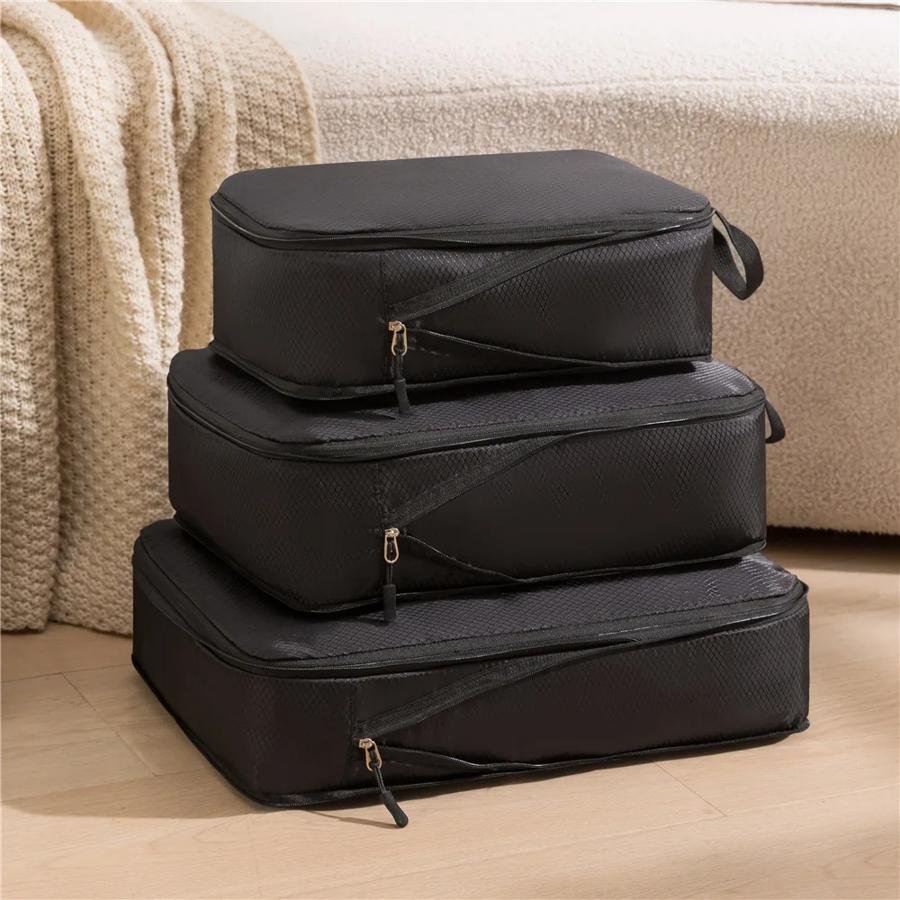
Quick answer: The best packing cubes UK travellers can buy are graduated sets of three or four in firm ripstop fabric, with a self-lubricating coil zip and bound seams. Start with a mid-price set of three, add compression cubes only if you overpack, and judge every cube on its zip, its stitching and honest sizing, never the logo.
What this guide covers
- How I ranked the best packing cubes UK sellers stock – I judge every cube on four things, in this order: the zip, the seams, the fabric, and honest sizing.
- The sizes that actually earn their place – Most people buy too many cubes and use half.
- What you are actually paying for – The gap between a bargain cube and a mid-price one is not the logo.
- My honest picks for 2026 – For most travellers, a graduated set of three or four standard cubes is the right call, full stop.
- Frequently asked questions – What are the best packing cubes UK travellers should buy first?
There is a shelf in my garage that would give a luggage buyer palpitations. Forty-odd packing cubes, some frayed, some faded, a couple I put through a boil wash out of sheer curiosity. I spent a decade selling outdoor kit in the Lake District, then years testing travel gear until my partner stopped asking why the spin cycle sounded like gravel. So when someone asks me for the best packing cubes UK shops actually sell, I do not reach for the shiniest box. I reach for the two or three that survived.
Here is the short version, because you are busy. A good packing cube is a mesh-topped fabric box that turns the jumble in your case into tidy, findable stacks. The best ones do it with a zip that glides, a seam that holds, and fabric that does not pill after a summer of airport carousels. Everything else is marketing.
How I ranked the best packing cubes UK sellers stock
I judge every cube on four things, in this order: the zip, the seams, the fabric, and honest sizing.
The zip is where cheap cubes die. A chunky, self-lubricating coil that runs the full length beats a thin metal zip every time, because you will yank it shut over a bulging load twice a day. If it catches on day one, bin it. The seams come next. Turn a cube inside out and look at the stitching where the mesh meets the base. Loose threads there mean a split after three trips.
Fabric is the quiet one. A ripstop nylon or a firm polyester holds shape and shrugs off a spilt shampoo. Softer, flimsier cloth sags, and a saggy cube is just a bag with delusions. Then sizing. Some sellers photograph a small cube next to a phone and hope you assume it is large. I measure everything.
The sizes that actually earn their place
Most people buy too many cubes and use half. After years of this, my honest kit is three: one large for tops and jumpers, one medium for trousers, one small for underwear and socks. That trio handles a week without thinking. A packing cube set gives you the graduated sizes in one go and works out cheaper than buying singles, which is why I steer nearly everyone toward a set first. The six-piece navy set is the unglamorous, does-the-job pick I keep recommending to friends who just want it sorted.
If you are a chronic overpacker, that is where compression earns its keep. A compression cube has a second zip that squeezes the air out and buys you real room. I will not pretend it makes clothes lighter, because it does not, but it does let you close the lid without the knee-on-the-case routine. More on the honest maths in my compression cubes guide.
What you are actually paying for
The gap between a bargain cube and a mid-price one is not the logo. It is the zip pull, the density of the mesh, and whether the seam is bound or just overlocked. I have run supermarket cubes and pricier ones through the same wash cycle, and the cheap mesh is the first thing to fray. That said, you do not need to overspend. A sensible mid-range cube outlasts a designer one dressed up with a name.
Here is how the main types stack up when you are choosing.
| Cube type | Best for | Rough price band | Watch out for |
|---|---|---|---|
| Standard set of three | Most travellers, a week away | £15-30 | Thin mesh that frays |
| Compression cubes | Chronic overpackers, bulky kit | £20-40 | A weak second zip |
| Cheap single cubes | Kids, laundry, spares | £5-12 | Flimsy zip pulls |
| Nine-piece set | Families, long or multi-stop trips | £25-45 | Buying more than you use |
For anyone counting the pennies, a cheap packing cube can be perfectly good if the zip is decent. The trick is buying cheap on purpose, not by accident. If you want the full lay of the land before you commit, Which? has level-headed testing on luggage, and knowing your airline's hand luggage rules first stops you buying cubes that never fit the bag.
My honest picks for 2026
For most travellers, a graduated set of three or four standard cubes is the right call, full stop. Buy the core packing cubes range, get the sizes matched, and learn the folding before you spend a penny more. Only add compression when you have proven to yourself that you pack too much, which, if you are reading a buyer's guide at eleven at night, you probably do.
The one line I would tattoo on every first-time buyer: the best cube is the one you will still be using in three years, not the one with the biggest number on the packet. If you want the technique that makes any decent cube punch above its price, my how to use packing cubes guide is the next stop.
Frequently asked questions
What are the best packing cubes UK travellers should buy first?
Start with a graduated set of three: a large for bulky tops, a medium for trousers, a small for underwear. Check the zip glides and the seams are bound, not fraying. A set costs less than buying singles and covers a full week.
Are expensive packing cubes worth it?
Not usually. The real quality is in the zip, the seams and the fabric weight, and a good mid-range cube matches a designer one on all three. Pay for a self-lubricating coil zip and firm ripstop fabric, not a logo.
How many packing cubes do I need for a week away?
Three is the sweet spot for most people: one large, one medium, one small. Add a fourth only if you are packing a mix of formal and casual, or switch to compression cubes if you routinely overpack.
About the author Neil Hartwell - Tested it, weighed it, ranked it Neil worked in outdoor-kit retail in the Lake District for a decade and now reviews travel gear obsessively. He has stress-tested zips, run compression cubes through the wash and knows which fabrics pill after a year. If a product claims 30% more space, Neil has already checked whether that is true. Writing for The Packing Cube Co..