Quick answer: Vacuum packing cubes do work, and they compress more than zip cubes – often close to half the packed height on bulky items. The trade-offs are heavy creasing, a valve or pump that can fail, and no weight saving at all, so they suit the outbound leg of a winter trip more than everyday travel.
What this guide covers
Every few months someone asks whether vacuum cubes are the upgrade from zip compression. Sometimes they are. Mostly they are a different tool that people buy for the wrong trip.
What they actually do
A vacuum cube is a sealed bag with a one-way valve. You fill it, close the seal, then push the air out with a pump or by rolling the bag towards the valve. The seal holds the reduced volume until you open it.
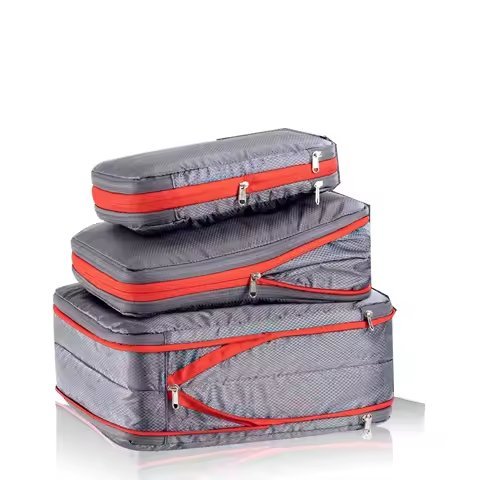
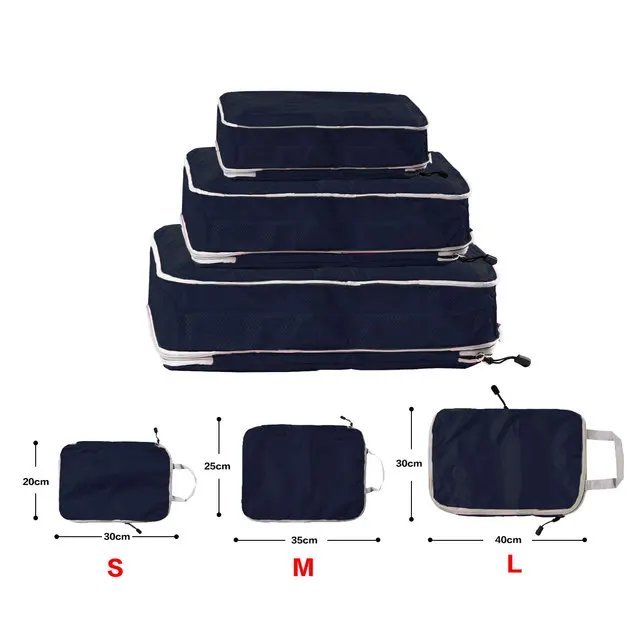
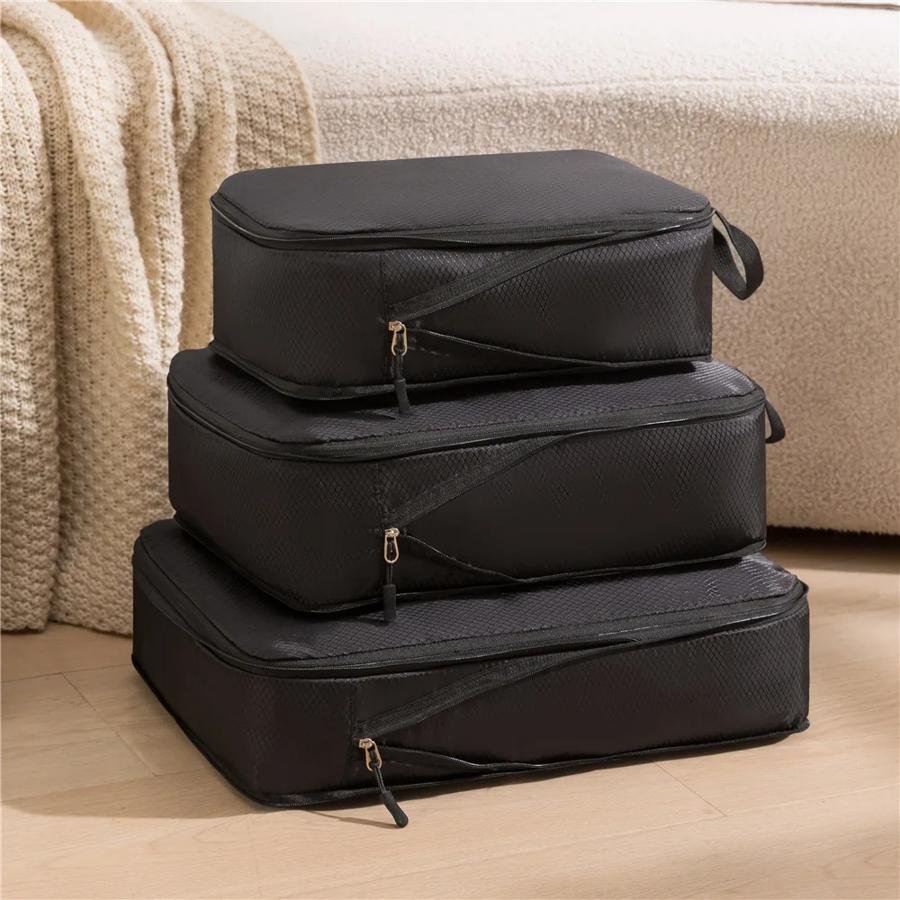
That gets you further than a zip compression cube, which relies on a second zip pulling the panel down and always leaves some air behind. On a fleece or a duvet jacket the difference is real.
Where they fall down
- Creasing. Far worse than zip compression. Anything you plan to wear without ironing should not go in one.
- The return leg. Without a pump, re-vacuuming in a hotel room means kneeling on a bag on the floor, and it never gets as flat as it did at home.
- Failure modes. A valve that leaks turns the bag into an ordinary one, usually overnight and usually unnoticed until the case will not shut.
- Weight. None saved. Not a gram, same as any compression.
When they are the right choice
One-way trips with bulky cargo. Moving a student into halls, taking winter bedding to a cottage, carrying a ski jacket out for a week. Anything where you compress once, at home, and creasing does not matter.
For normal travel – a week away, moving between hotels, wanting to look presentable – zip compression wins on practicality every time. The compression guide has the measured comparison, and compression vs regular cubes covers the simpler choice most people are actually making.
The cabin bag caveat
Vacuum bags help with volume, and cabin allowances are volume-limited, so on paper they are ideal. In practice a rigid vacuum brick does not conform to a sizer the way a soft compressed bag does, and some cabin bags end up harder to fit, not easier.
If the sizer is your problem, soft cubes that let the bag flex are usually the better answer – see the carry-on guide.
The short version
- Vacuum cubes compress harder than zip cubes – sometimes close to half the height on bulky soft items.
- They crease badly, so nothing you intend to wear straight out of the bag should go in one.
- Re-compressing on the return leg without a pump is awkward and never as effective.
- Like all compression, they save volume and no weight whatsoever.
- Best for one-way trips with bulky cargo; zip compression wins for normal travel.
Frequently asked questions
Do vacuum packing cubes really save space?
Yes, more than zip compression does - often close to half the packed height on fleeces, coats and bedding. The saving is real, but it comes with heavy creasing and a valve that has to keep working for the whole trip.
Do you need a pump for vacuum packing cubes?
Most can be rolled towards the valve to push the air out by hand, but you will never get as flat as a pump manages. If the bag came with a pump and you leave it at home, expect noticeably less compression on the way back.
Are vacuum bags allowed in hand luggage?
Yes, there is no rule against them. Whether they help is another matter - a rigid vacuum brick does not squash into a sizer the way a soft bag does, so they can make a cabin bag harder to fit rather than easier.
Do vacuum packing cubes reduce weight?
No. Removing air removes volume, not mass. If your problem is a hold-bag weight limit, no form of compression will help you and you need to take fewer or lighter things.
Vacuum bags or compression cubes - which should I buy?
Compression cubes for almost all normal travel, because they crease less, re-compress easily and cannot fail. Vacuum bags only if you are moving bulky items one way and creasing genuinely does not matter.