Quick answer: A regular packing cube organises; a compression cube has a second zip that squeezes trapped air out and shrinks the load by roughly a quarter. If your problem is finding things, buy regular. If your problem is the lid not shutting, buy compression.
What this guide covers
People ask which is better, and the honest answer is that they solve different problems. Buying the wrong one is why some people conclude cubes are pointless.
What the second zip actually does
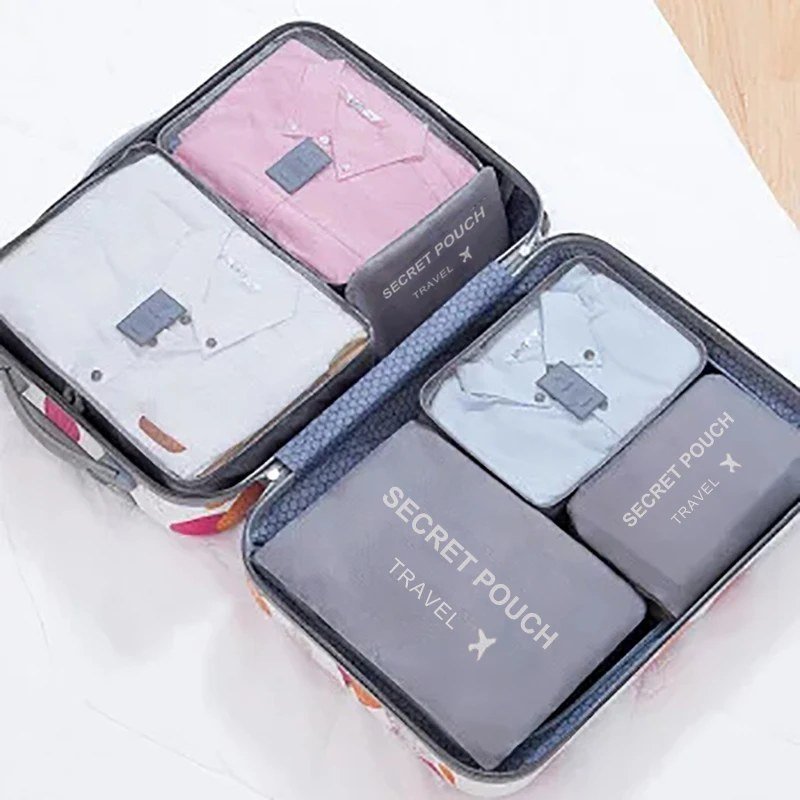
A regular cube is a zipped fabric box. It holds a category of clothing in a squared-off block so a case packs like a chest of drawers.
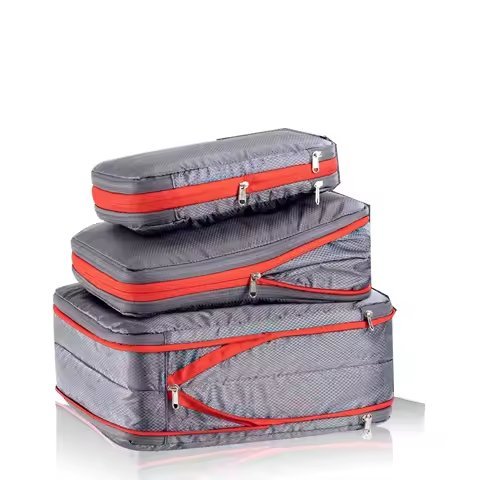
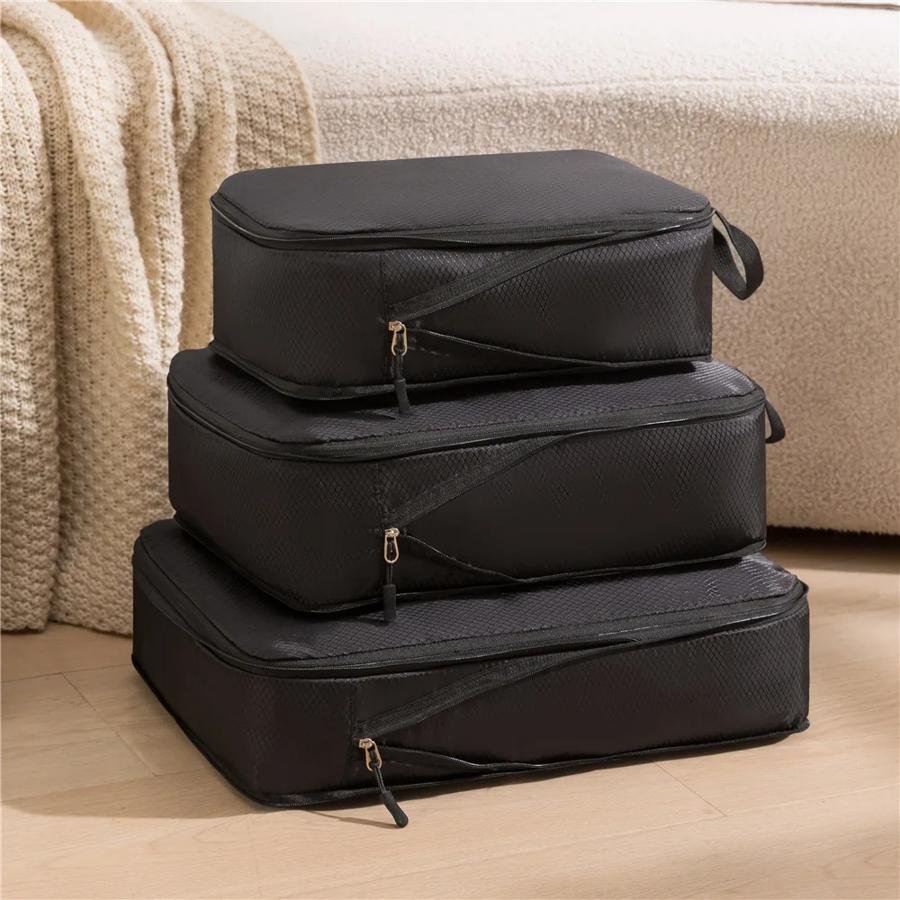
A compression cube is the same box with a second zip set lower down the sides. You fill it, close the first zip, then run the second one, and the panel pulls down and forces the trapped air out. Nothing is vacuum-sealed and no pump is involved - it is just a bag that can be made smaller.
How much space you actually gain
| What you are packing | Realistic saving |
|---|---|
| Fleeces, jumpers, padded coats | 25–35% |
| Towels and bedding | Around 30% |
| T-shirts and light tops | 10–15% |
| Jeans and structured trousers | Very little |
| Anything already flat | None worth having |
The pattern is simple: compression works on trapped air, so it works brilliantly on bulky soft things and does almost nothing on dense flat ones. The full guide goes through the measurements.
What compression does not do
It does not reduce weight. Not by a gram. If you are fighting a hold-bag scale rather than a lid, compression will not help you and may actively hurt, because it tempts you to fit more in.
It also creases more than a regular cube, since you are pressing fabric together under tension. For shirts and anything structured, a firm regular cube packed flat is better - there is more on this in fold or roll.
So which should you buy?
Most people should own both, and the split is usually three regular to one or two compression. Use regular cubes for the things you want to find, and compression cubes for the bulk: knitwear, coats, and the journey home when everything has stopped folding neatly.
If you only buy one thing and you travel cabin-only, buy compression. If you check a bag and just want to stop rummaging, buy regular. A matched set that includes both is usually cheaper than assembling the two separately.
The short version
- A compression cube is a regular cube with a second zip that forces trapped air out – no pump, no vacuum.
- Expect 25–35% on bulky soft items like fleeces and coats, and almost nothing on jeans or flat clothing.
- Compression saves space, never weight – it is no help against a hold-bag scale.
- Regular cubes crease less, so shirts and structured clothes belong in a firm regular cube packed flat.
- Most travellers want roughly three regular cubes to one or two compression ones, not all of either.
Frequently asked questions
Are compression packing cubes worth it?
If your problem is a case that will not shut, yes - they genuinely recover a quarter to a third of the height of bulky soft clothing. If your problem is finding your socks, a regular cube does that job for less money and less creasing.
Do compression cubes make clothes more creased?
Somewhat, because you are holding fabric under tension. Soft items like t-shirts and knitwear do not care. Shirts, linen and anything structured do, so pack those flat in a firm regular cube instead.
Can I use compression cubes in hand luggage?
That is where they are most useful, because cabin allowances limit volume rather than weight. Compressing bulky layers is often what turns a bag that does not fit the sizer into one that does.
Do compression cubes work without a vacuum or a pump?
Yes. The second zip does all the work mechanically by pulling the sides of the cube down, so there is nothing to plug in and nothing to break. That is the main practical advantage over vacuum bags.
Which is better for a suitcase, compression or regular?
Both, in a ratio of about three to one. Regular cubes keep a case organised and let you find one thing; one or two compression cubes handle the bulky items and give you slack for the journey home.