Quick answer: Colour code by person when you share a case, and by category when you travel alone. Colour is recognised instantly and from any angle, which is why it beats labels – the person searching the bag is often not the person who packed it.
What this guide covers
Colour coding sounds like organising for its own sake. It is actually solving a specific problem: finding one thing in a bag, quickly, often in poor light, often by someone who did not pack it.
Why colour beats labels
A label has to be found, oriented and read. A colour is recognised from across a room, upside down, by a four-year-old, and in the half-light of a hotel room at six in the morning.
Labels also degrade. Written tags peel, smudge and get swapped between cubes. A blue cube stays blue for the life of the cube.
By person, for shared cases
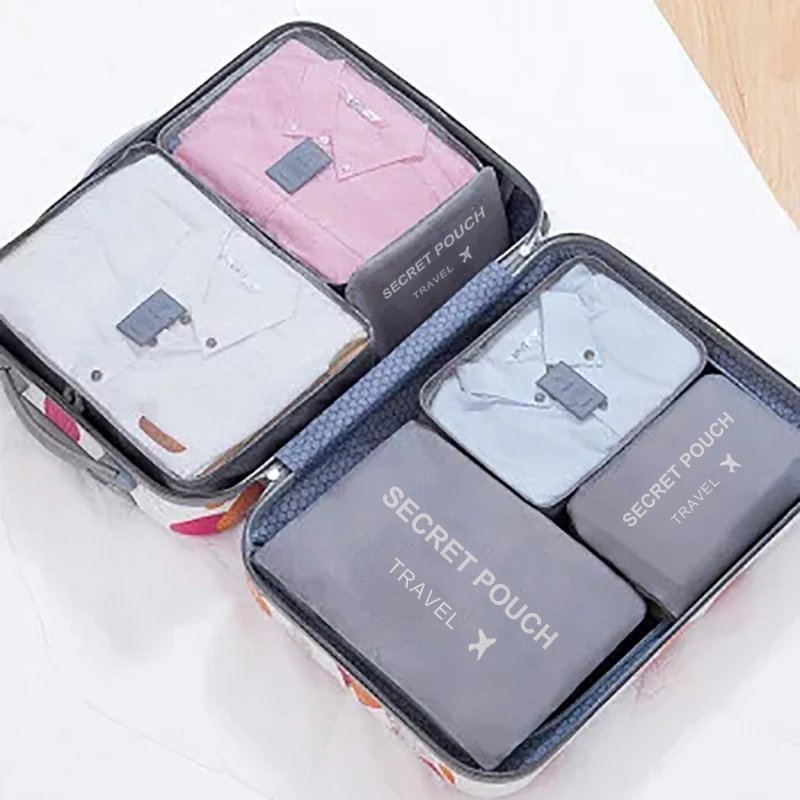
This is the version that changes family holidays. Each person gets a colour inside one shared case, so you lift out the green cube rather than emptying the suitcase onto a hotel bed.
It also makes the packing limit visible and impersonal – the cube is full or it is not. The family packing guide covers the whole system, and the kids post covers how it works by age.
By category, for solo travel
Travelling alone, person-coding is meaningless, so colour goes to categories instead. The convention worth adopting is consistency rather than any particular scheme: whatever you choose, use it every trip so it becomes automatic.
A common setup is dark for bottoms, light for tops, a bright small one for underwear and socks, and one distinctive colour reserved permanently for laundry. That last one is the most useful of the lot.
Keep one colour for dirty clothes
Whichever scheme you use, reserve a single colour for laundry and never use it for anything else. It removes an entire recurring decision, and it means nobody ever opens the wrong cube.
Our pastel and multi-colour sets exist mostly for this, and personalised cubes take the same idea further for families who have run out of distinct colours.
The short version
- Colour is recognised instantly, from any angle, by anyone – a label has to be found and read.
- Written labels peel, smudge and get swapped; a blue cube stays blue.
- Code by person when sharing a case, by category when travelling alone.
- Consistency matters more than the scheme: use the same colours every trip until it is automatic.
- Reserve one colour permanently for dirty laundry and never use it for anything else.
Frequently asked questions
How do you colour code packing cubes?
By person if you share a suitcase, by category if you travel alone. The important part is using the same scheme every trip, so that finding something stops being a search and becomes recognition.
Is colour coding better than labelling cubes?
Yes, for speed. A colour is recognised across a room and in poor light, where a label has to be located, turned the right way up and read. Labels also peel off or get swapped between cubes over time.
What colours should I use for packing cubes?
Whatever you can tell apart quickly, including in dim light. A common setup is dark for bottoms, light for tops, a bright small one for underwear, and one colour reserved permanently for laundry.
How do you colour code for a big family?
Once you run out of clearly distinct colours, add a second signal - patterned cubes, or personalised ones with a name embroidered on. Two children in similar shades of blue defeats the whole purpose.
Should dirty clothes have their own cube?
Yes, and always the same colour. Reserving one colour for laundry means nobody opens it by mistake, and it removes a decision you would otherwise make afresh on every trip.