Quick answer: Ski packing is a bulk problem, not a quantity one. Wear your heaviest layer and boots to the airport, compress the jacket and salopettes, hire skis and boots at the resort, and give wet kit its own sealed bag for the journey home.
What this guide covers
A ski week involves fewer clothes than a beach week and roughly three times the volume. Everything is thick, and thickness is what fills a case.
Wear the bulk, do not pack it
The single biggest win, and it costs nothing. Your ski jacket, your heaviest jumper and your boots go on your body to the airport, not in the bag.
You will be warm in the terminal for an hour. In exchange you save something like a third of a suitcase, which is the difference between one bag and two.
Compress what is left
Salopettes, mid-layers and a spare fleece are almost entirely trapped air, which makes them the ideal candidates for compression. Expect to recover roughly a third of their packed height.
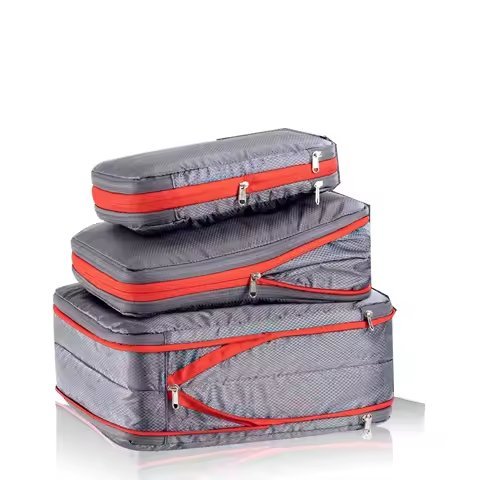
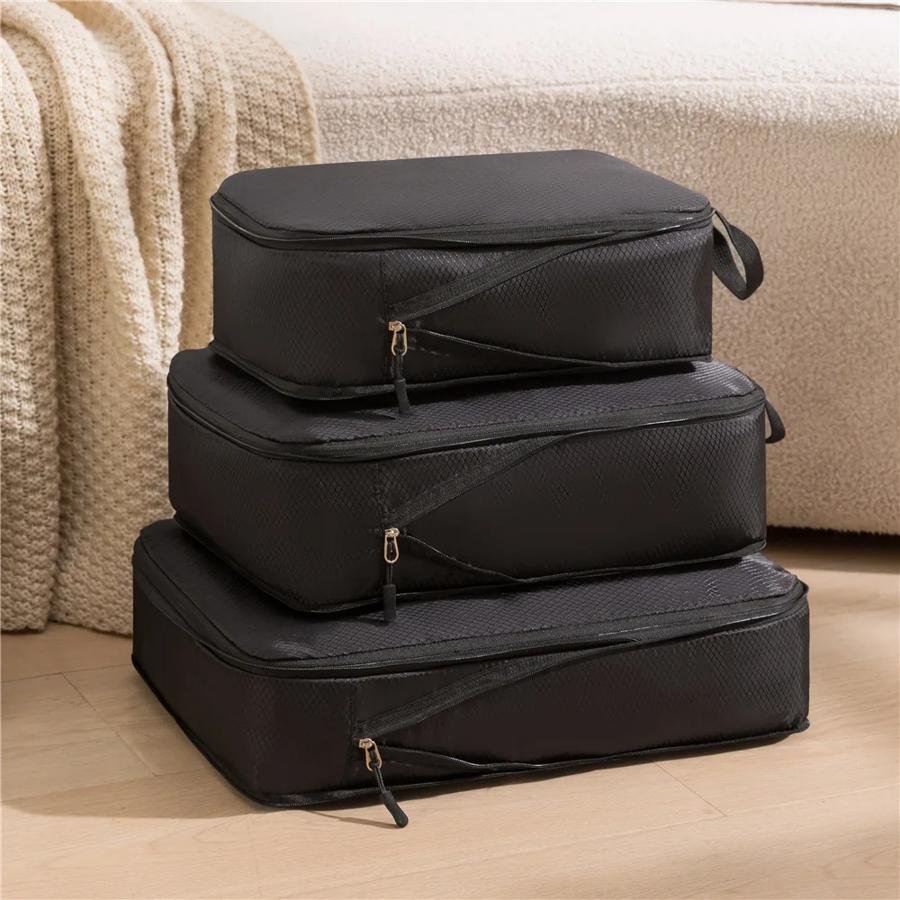
This is the trip where compression cubes stop being a nice-to-have. A large cube for the bulky layers and a couple of mediums for everything else is the standard setup – the numbers are in the compression guide.
Hire rather than carry
Skis, boots and poles are almost always cheaper to hire than to fly with once you count the oversize baggage fee, and infinitely easier to travel with. Unless you have boots fitted to your feet, hire.
Helmets are usually available too. What is worth taking: your own goggles, your own gloves, and good socks – the three things that are personal and that hire shops do worst.
The wet kit problem
Ski clothes come off wet every single day, and on the last day they go into the case wet. Without a sealed bag, that is a suitcase of damp clothes for the flight home.
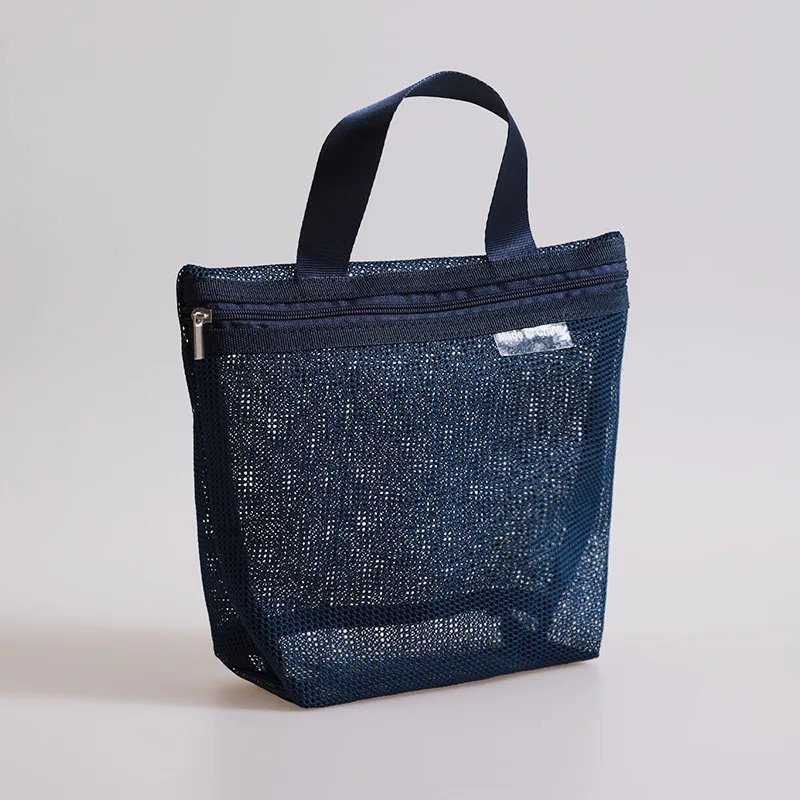
One wipe-clean bag kept empty on the way out solves it, and gloves and base layers dry faster on a radiator overnight than they will in a case. For the wider list, see the trip-type guide.
The short version
- Wear the ski jacket, heaviest jumper and boots to the airport – it saves roughly a third of a case.
- Salopettes and mid-layers are mostly trapped air, so compression recovers about a third of their height.
- Hire skis, boots and poles unless your boots are fitted – oversize baggage costs more than hire.
- Take your own goggles, gloves and socks; those are the items hire shops do worst.
- Keep one sealed wipe-clean bag empty on the way out for the wet kit coming home.
Frequently asked questions
How do you pack a ski jacket in a suitcase?
Ideally you do not - wear it to the airport. If it must go in the case, compress it in a large compression cube, which will take roughly a third off its packed height. It is bulk rather than weight, so compression is exactly the right tool.
Is it cheaper to hire or fly with skis?
Hiring is cheaper on almost every trip once you add the oversize baggage charge both ways, and it removes the risk of damage in transit. The exception is boots, where a personal fit genuinely matters.
What should I pack for a week's skiing?
Two or three base layers, two mid-layers, one jacket and salopettes, five pairs of ski socks, evening clothes for the week, plus goggles, gloves and sun cream. The clothing count is low; the volume is what needs managing.
How do you pack wet ski clothes to come home?
In a sealed wipe-clean bag kept separate from everything dry, and dry what you can on a radiator the night before. Gloves and base layers dry overnight; a jacket will not, so it goes in the sealed bag.
Do I need special packing cubes for a ski trip?
Not special, but you want at least one large compression cube. The standard mistake is taking four medium cubes, which is the wrong shape for bulky layers - one large compression cube does far more work.